




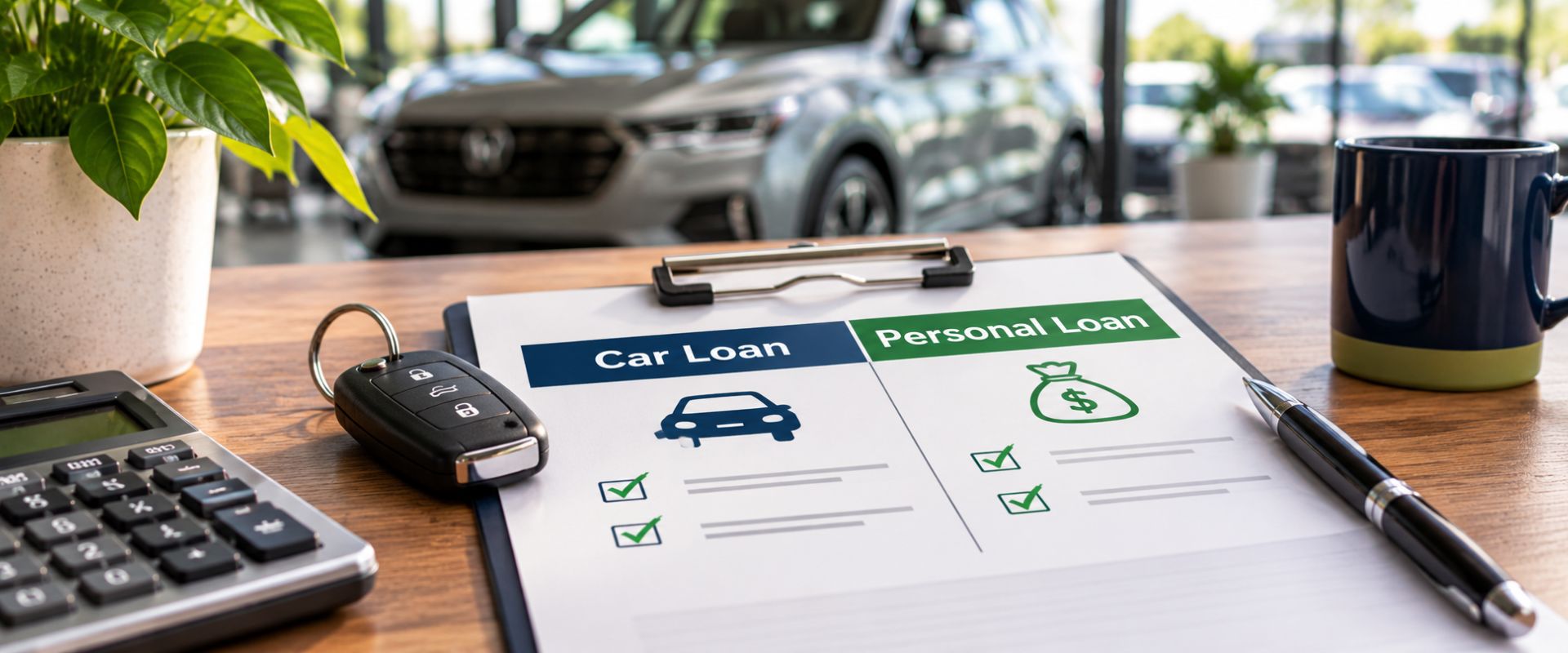
When financing a vehicle, the choice of a car loan vs personal loan decides a great deal about what you ultimately pay.
A car loan is secured against the vehicle you are buying. A personal loan is usually unsecured, and that single difference drives the rate.
Because the lender can recover a car but cannot easily recover an unsecured debt, the secured option is almost always priced lower.
This guide compares a car loan vs personal loan so you can pick the cheaper option for your circumstances rather than the first one offered.
Security means the lender has an asset they can recover if the loan is not repaid, which materially reduces their risk.
Lower risk means a lower rate, which is the entire mechanism behind the gap in a car loan vs personal loan comparison.
It also means the lender cares about the car itself, including its age and condition.
Dealer finance is a third option, and it is worth comparing rather than accepting at the point of sale.
Convenience at the dealership frequently costs more than arranging finance beforehand.
Knowing your rate before you walk in also strengthens your negotiating position on the car.
Getting car loan vs personal loan right from the start saves weeks of back and forth with lenders.
For a straightforward purchase of a reasonably new car, the secured car loan is typically the cheaper choice by a clear margin.
A personal loan comes into its own where the vehicle is older than a lender will secure against, or where you are buying privately.
We compare both across the panel through our car loan broker Perth service.
After 10 years inside the Big Four banks, I saw how many Perth families missed out or borrowed with the wrong lender. The Finance Yogi exists to change that - we compare the whole market and explain every number in plain English.
Mohit Brahmbhatt
Older vehicles are often outside a car loan lender’s criteria, because the security would have little value by the end of the term.
Private sales can also be harder to finance with a secured car loan, depending on the lender’s requirements.
If you need funds for related costs beyond the car itself, a personal loan gives flexibility a secured facility does not.
And if you value not having the vehicle encumbered, an unsecured loan leaves you free to sell at any time.
Compare the total repayable over the full term, including establishment and ongoing fees, rather than the advertised rate alone.
Model repayments with our borrowing power calculator.

Your credit history matters on both products, and a strong file can narrow the gap between them considerably.
The loan term affects total cost too. A longer term lowers the monthly figure but increases the interest paid overall.
A deposit or trade-in reduces the amount financed and can move you into a better rate tier on either product.
For business use, a chattel mortgage may beat both options on tax treatment, which is worth checking before you decide.
Business buyers should compare both against a chattel mortgage, since the tax treatment can outweigh a small rate difference.
See our guide on how a chattel mortgage works and on novated leasing.
Answer the questions below before applying for anything.
They determine which product is actually available and cheapest for you.
Arranging finance before you shop also improves your position at the dealership.
With those answered, the car loan vs personal loan decision is usually obvious.
We compare both plus dealer finance without a stake in the outcome. Explore our finance services.
Book a free, no-obligation chat and we will compare every option before you walk into a dealership.
Source: vehicle finance guidance from ASIC MoneySmart car loans, and borrowing information from ASIC MoneySmart home loans. Rates and fees vary between lenders.